
The Homeowner's Guide to Choosing the Perfect Kitchen Backsplash
Backsplashes take up a small portion of your kitchen, but they can make or break your kitchen's look. See our guide to choosing the perfect kitchen backsplash.
If you’re planning a kitchen remodel in San Diego, it’s easy to feel overwhelmed by the number of decisions you have to make. Should you add an island? How do you want to approach the cabinets? Do you need new appliances? Do you want a bright, open kitchen, or something warmer and more intimate?
Amid those larger questions, backsplash design often gets pushed to the back of the list. That’s a mistake. Even though a backsplash covers a relatively small portion of your kitchen, its material, color, and pattern can easily become the room’s focal point. A well-chosen backsplash pulls everything together. The wrong one can undermine an otherwise excellent kitchen.
Below are the key considerations that help narrow down your options. Once you have a clear direction, your design team can refine the selection based on your space, budget, and lifestyle.
1. Match Your Backsplash to Your Countertops
Your backsplash and countertops are the two most visually active surfaces in the kitchen. They need to work together, not compete. Whether you select your countertop material first or start with the backsplash, the two decisions are connected.
A common approach: lead with the countertop, since it covers more surface area and is significantly harder to replace once installed. Then select a backsplash that complements it in tone and texture. If your countertop has strong veining or a bold pattern, a quieter backsplash often works better. If your countertop is a solid, neutral material, the backsplash is a good place to add character.
One popular current approach is extending the countertop material up the wall as a full-height backsplash. This works especially well with quartz or slab marble and creates a seamless, high-end look that photographs well and is easy to maintain.
2. Decide on a Style
The backsplash should reflect your kitchen’s overall direction, not fight it.
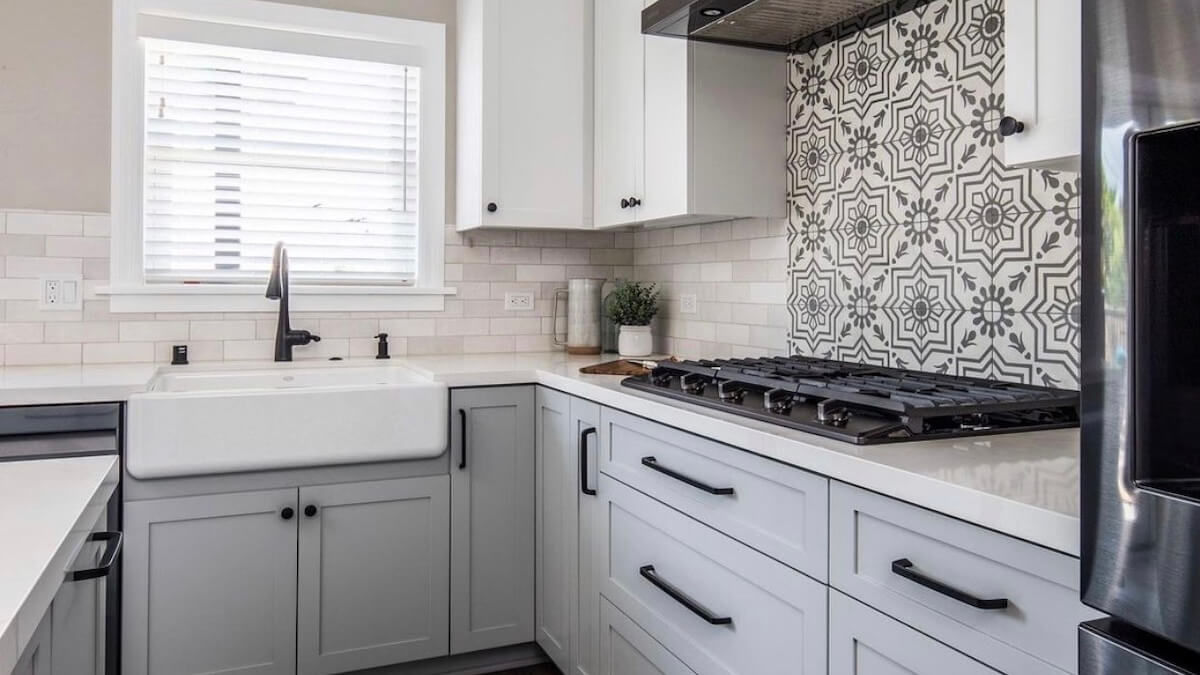
If you’re designing a sleek, contemporary kitchen, you might lean toward large-format porcelain slabs, minimalist subway tile in a simple stack bond, or elongated geometric tile. For a warmer, more artisanal look, handmade zellige tile, terracotta, or exposed brick can add texture and character. Traditional kitchens often pair well with classic white subway tile in a brick pattern, natural stone, or decorative ceramic in a medallion or mosaic layout.
A two-zone backsplash — where a simple field tile covers most of the wall and a decorative accent tile creates a focal point above the range — is a popular way to combine restraint and personality in the same kitchen.
Whatever direction you choose, land on the style before you commit to a material. The same subway tile can read very differently depending on color, grout, and pattern orientation, so get specific about the look before making purchases.
3. Choose a Material
Material choice drives durability, maintenance, cost, and aesthetics. Here are the most common options.
Tile
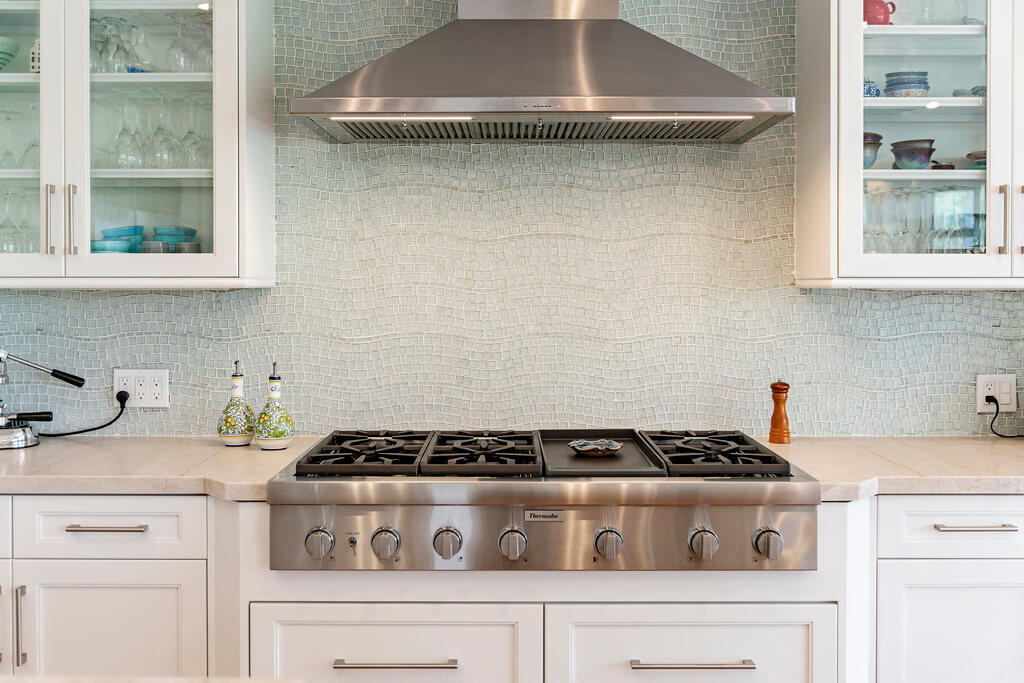
Tile remains the most popular backsplash material for good reason: it is durable, easy to clean, and available in an enormous range of sizes, colors, finishes, and profiles. Ceramic and porcelain are the most practical choices for most kitchens. Glass tile adds reflectivity and works well in smaller spaces where you want to bounce light. Small-format glass mosaic tile in a neutral or coastal tone can give a kitchen a soft, shimmering quality that reads differently at every hour of the day.
Large-format tiles and slabs reduce grout lines for a cleaner appearance. Handmade zellige and terracotta tile have become increasingly popular for their natural variation and texture.
Subway Tile
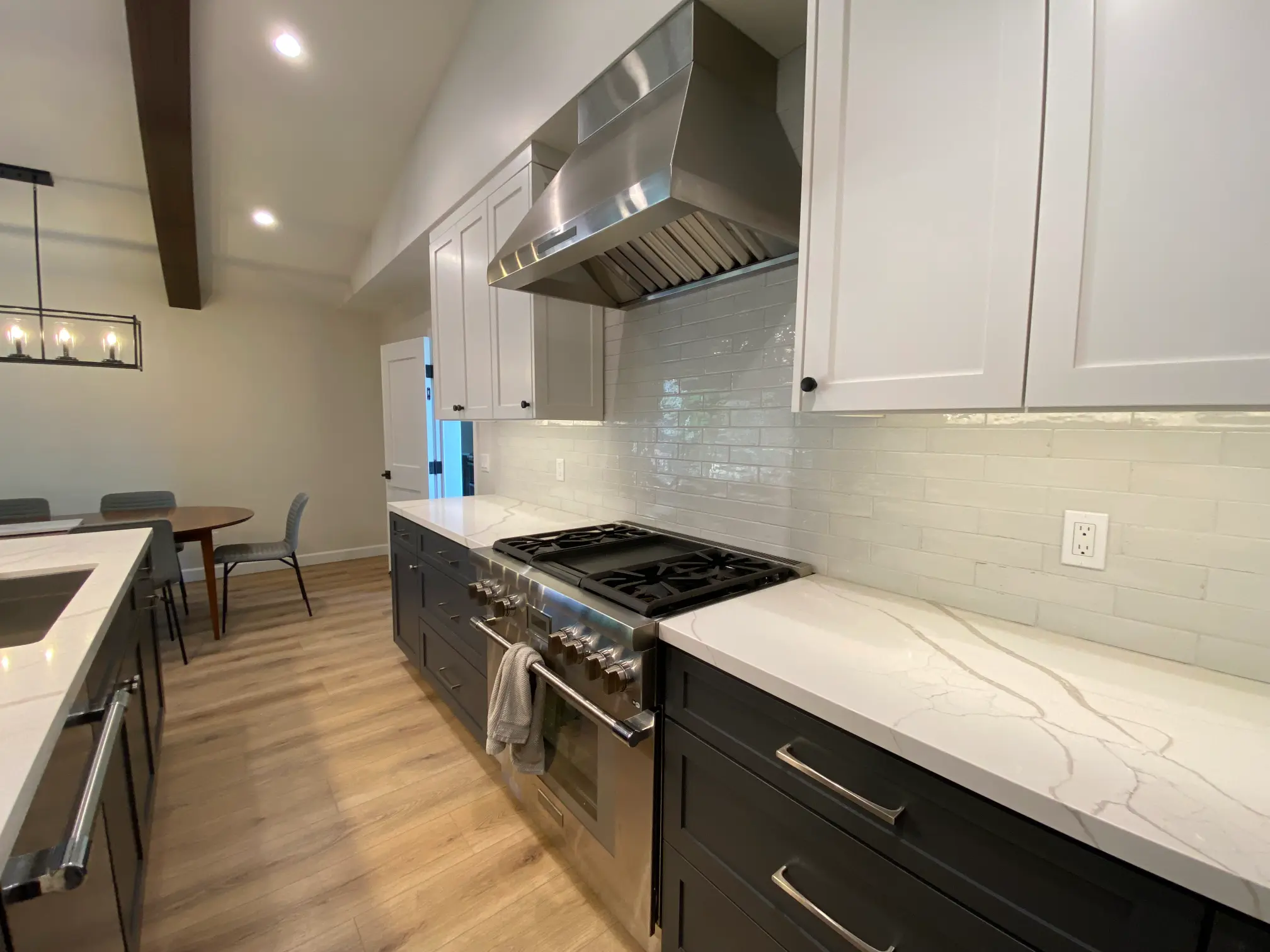
Classic 3x6 subway tile deserves its own mention because of how widely it is used and how much it varies in execution. White ceramic in a standard brick pattern is timeless and inexpensive. Longer, narrower profiles in a vertical stack pattern feel more contemporary. Glossy, matte, and crackled glazes all read differently. Grout color is a critical decision: white or light grout keeps things seamless, while dark grout emphasizes the grid and adds visual weight.
Brick
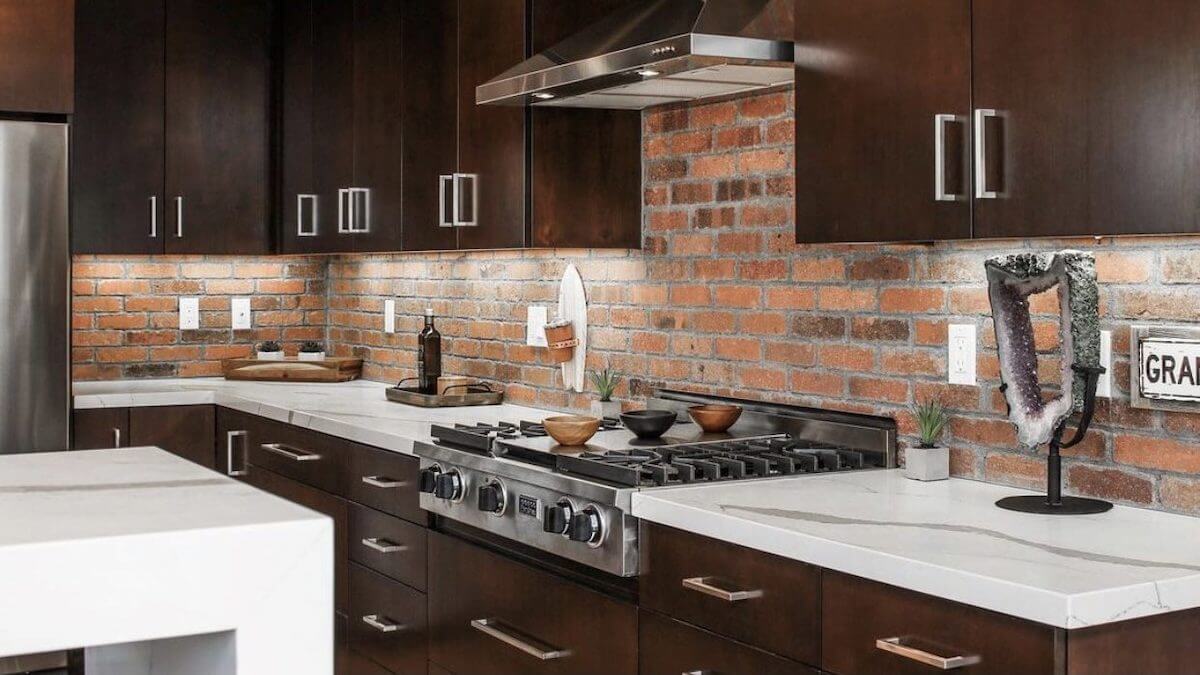
If you want a rustic, country-home look for your backsplash, brick is your material of choice. Brick’s texture complements the smooth surfaces in the rest of your kitchen, like the countertops and cabinets. Brick comes in varying shades, from deep red to pale pink or white, so you can almost always find brick that matches your kitchen’s look.
Since brick has such a unique look and texture, you’ll have to take extra care to match your features to it carefully. Because brick draws the eye strongly, it works best when the surrounding cabinetry and countertops are relatively quiet.
Natural Stone
Marble, travertine, quartzite, and slate are all used for backsplashes. Natural stone adds organic variation that manufactured materials cannot match. The trade-off is maintenance: stone is porous and requires sealing, and some varieties are more susceptible to etching from acidic foods and cleaners. For high-use cooking areas, honed marble or a more durable quartzite is often a better choice than polished marble.
Stainless Steel
Stainless steel suits contemporary and industrial kitchens. It is durable, easy to clean, and resistant to heat. The main drawbacks are fingerprints and water spots, which show up readily on polished surfaces. A brushed or matte finish hides these better.
4. Consider Your Budget
A backsplash can range from modest to significant depending on material and complexity of installation. Standard ceramic tile is one of the most cost-effective options. Handmade tile, natural stone, and large-format slabs cost considerably more in both material and labor.
If the backsplash is not your highest priority, choose a durable, clean material that complements your countertops without competing with them. If you want the backsplash to be the room’s signature element, budget accordingly and simplify elsewhere. Your remodeling team can help you identify where your money will have the most impact in the overall design.
5. Plan for Maintenance
One consideration that is easy to overlook: how much maintenance are you willing to do? Glossy tile shows water spots and grease more visibly than matte finishes. Grout lines, particularly light-colored grout in a small-format tile pattern, require regular sealing and can be difficult to keep clean near the range. Natural stone requires periodic resealing.
If your kitchen gets heavy use, factor maintenance into your material choice from the start, not after installation.
Bring Your Backsplash Vision to Life
A backsplash is a relatively small investment in the context of a full kitchen remodel, but it has an outsized impact on how the room looks and feels. Getting it right requires balancing style, material, budget, and function, and that balance looks different in every kitchen.
Murray Lampert’s in-house architectural designers and interior designers work through these decisions with you as part of the design process. If you are ready to start planning your kitchen remodel, contact our team to schedule a consultation.