
San Diego House Flippers - What Every Buyer Needs to Know
A licensed San Diego contractor explains the warning signs of a bad house flip, the risks of unpermitted work, and the due diligence steps every buyer should take before closing on a flipped home.
| *By Gregg Cantor, President & CEO — Murray Lampert Design, Build, Remodel | CA Lic. #458038* |
San Diego’s housing market has always attracted house flippers - investors who buy distressed properties, make rapid cosmetic improvements, and sell at a profit. In a market where median home prices regularly exceed $1,000,000, a flipped home can look like a deal. Sometimes it is. Often it isn’t.
After more than 40 years of licensed contracting in San Diego and years of expert witness work on real estate non-disclosure cases, I’ve seen what happens when buyers purchase a flipped home without knowing what to look for. The pattern is consistent: fresh paint, new flooring, updated fixtures. Everything looks clean and modern at first glance. What’s underneath is another story. In many of these cases, the work was done by unlicensed contractors with no workers’ compensation or liability insurance. Under California Business and Professions Code Section 7031, a property owner who hires an unlicensed contractor forfeits the right to seek damages from that person when the work fails. For the buyer who comes along later, that means inheriting deficient work that was never subject to CSLB oversight and carried no professional accountability.
This post is for buyers, real estate agents, and anyone who wants to understand the real risks of flipped homes in San Diego. I’ll walk you through what I’ve seen in my expert witness work, what to look for before making an offer, and what legitimate renovation actually looks like from a licensed contractor’s perspective.
Why Flipped Homes Carry Real Risk
The incentive structure of house flipping works against the buyer. A flipper’s profit depends on minimizing renovation costs and maximizing sale price. In practice, that usually means cosmetic improvements instead of substantive ones: new paint over water-damaged walls, luxury vinyl plank over a cracked slab, updated cabinet faces over compromised plumbing.
In one case I reviewed as an expert witness, a home in the 92117 zip code had been fully cosmetically renovated and sold. After close of escrow, the buyer began a remodel and removed the flooring. What they found underneath was a severely cracked concrete slab with moisture intrusion evidence and adhesive residue from multiple generations of flooring, each installed over the previous one to avoid disclosing what was below.
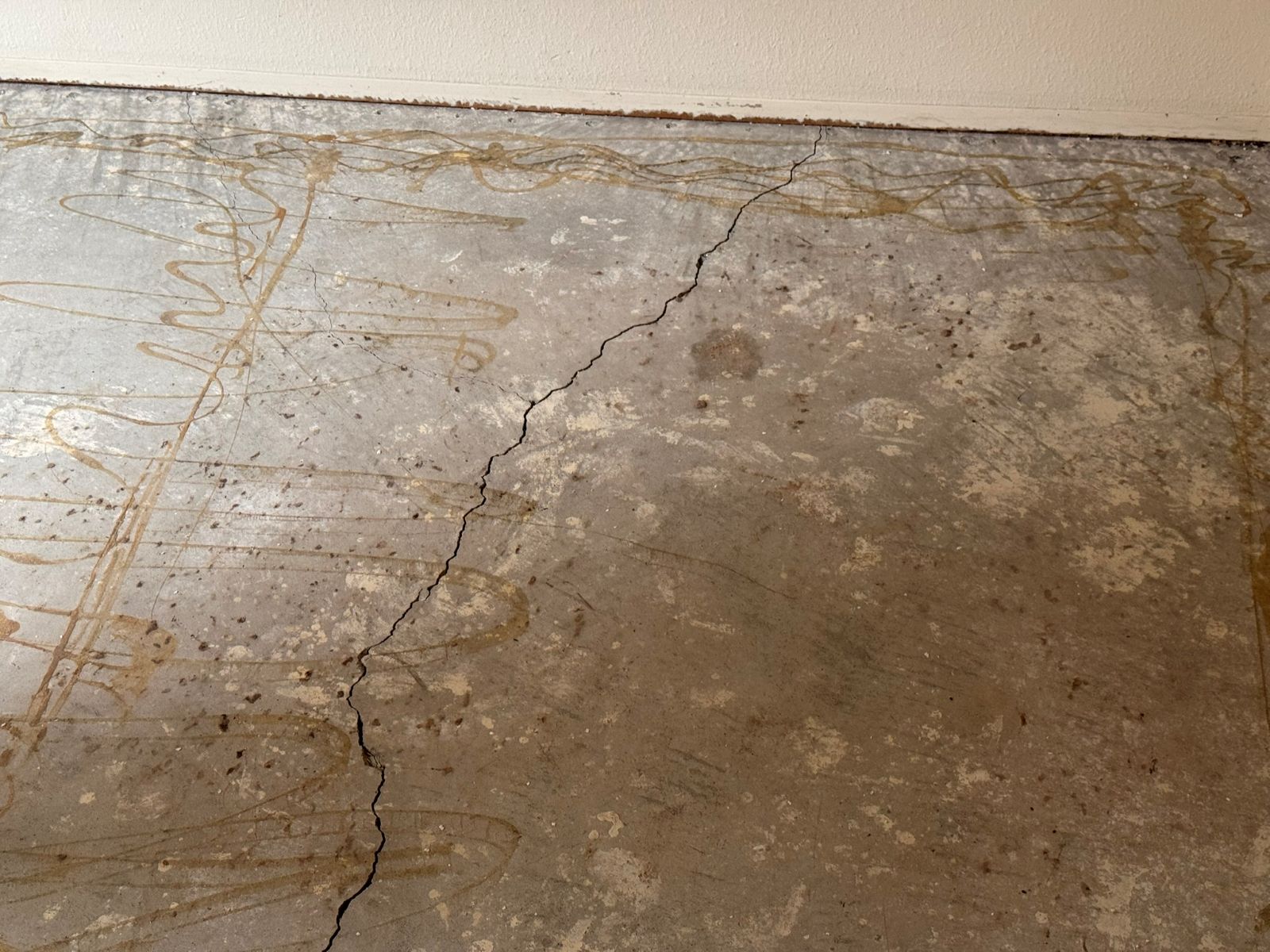
The slab damage required a full structural assessment. The cost of remediation substantially exceeded what the buyer had budgeted. No permits existed for any of the flooring work, which meant none of the successive cover-ups had ever been inspected.
That’s the risk that doesn’t show up at a showing.
Unpermitted Work Is the Core Problem
California law requires permits for most structural, electrical, plumbing, and HVAC work. Permits exist so that city inspectors can verify the work meets code before it’s covered up by finished surfaces. When flippers skip permits, which happens often because permits cost time and money, the work is never inspected. The buyer inherits code violations they had no way of knowing existed, and they are on the hook for the corrections. That is never cheap.
In San Diego, unpermitted work discovered after close of escrow can result in:
- Stop-work orders if the buyer later attempts to remodel
- Civil penalties for non-compliance
- Mandatory demolition of non-compliant construction to allow inspection
- Lender complications if discovered during refinancing
- Disclosure liability if the buyer eventually tries to resell
The City of San Diego’s Development Services Department issues Inspection Correction Notices when permitted work fails inspection. The document below came out of an actual expert witness case. Six separate correction items were flagged on a single property, including an electrical sub-panel installed in an illegal location, gas lines that had never been pressure-tested, unverified footing conditions, and plumbing that was not properly vented. And this was only the beginning. Opening walls for inspection added time, cost, and disruption the buyer had not anticipated.
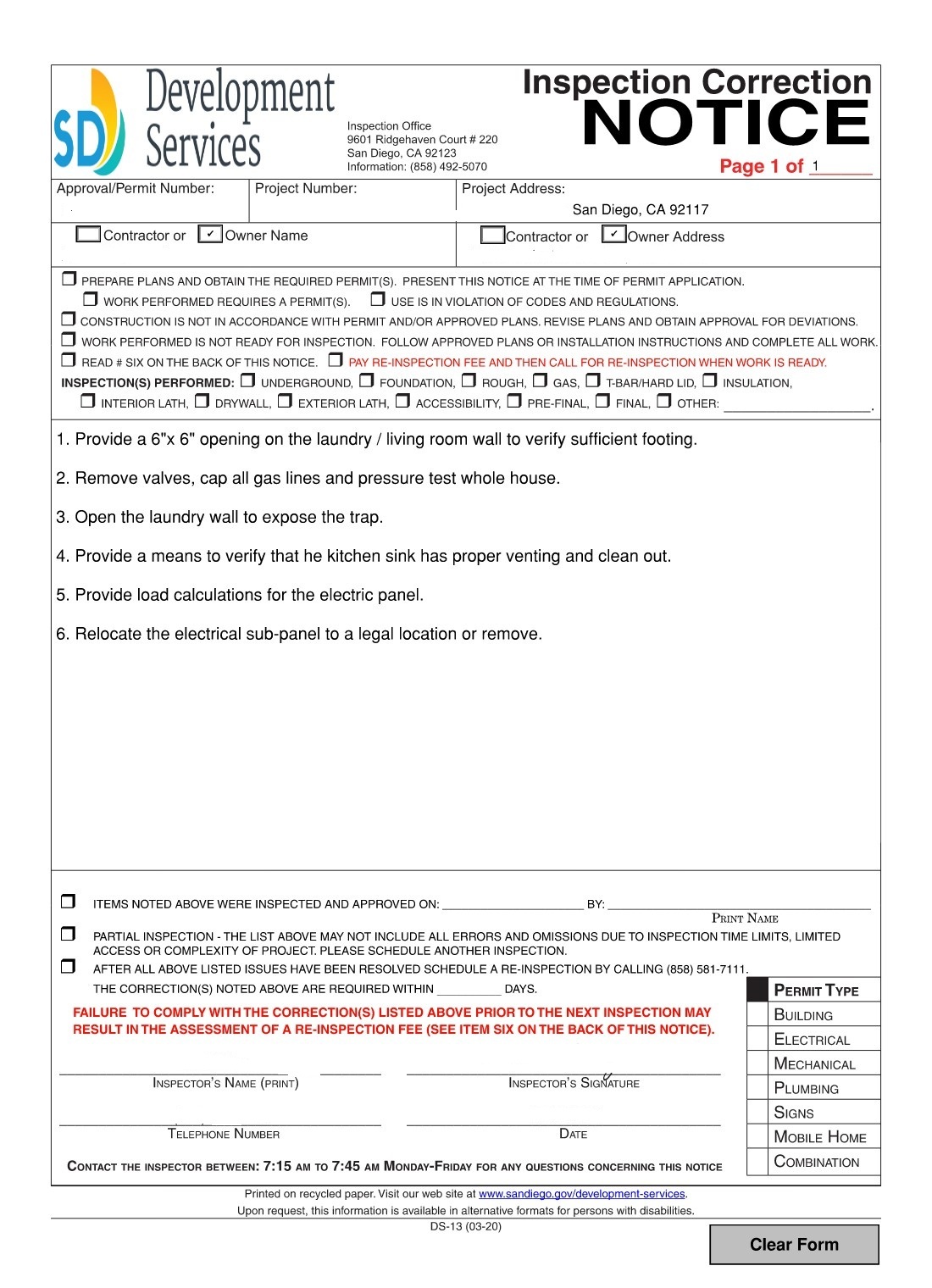
This document represents what happens when work actually gets inspected. Without a permit, none of these deficiencies would have been caught. The buyer would have inherited all of them with no record, no disclosure, and no recourse against the flipper.
Red Flags Before You Make an Offer
You don’t need to be a contractor to spot warning signs during a showing. Here’s what to look for.
Diagonal cracks at door and window corners
A crack running diagonally from a door or window frame corner, or tracking along the wall-to-ceiling junction above a doorway, is one of the most consistent indicators of foundation movement or differential settlement. These cracks follow the path of least structural resistance. They don’t appear in homes that were properly built and have settled uniformly.
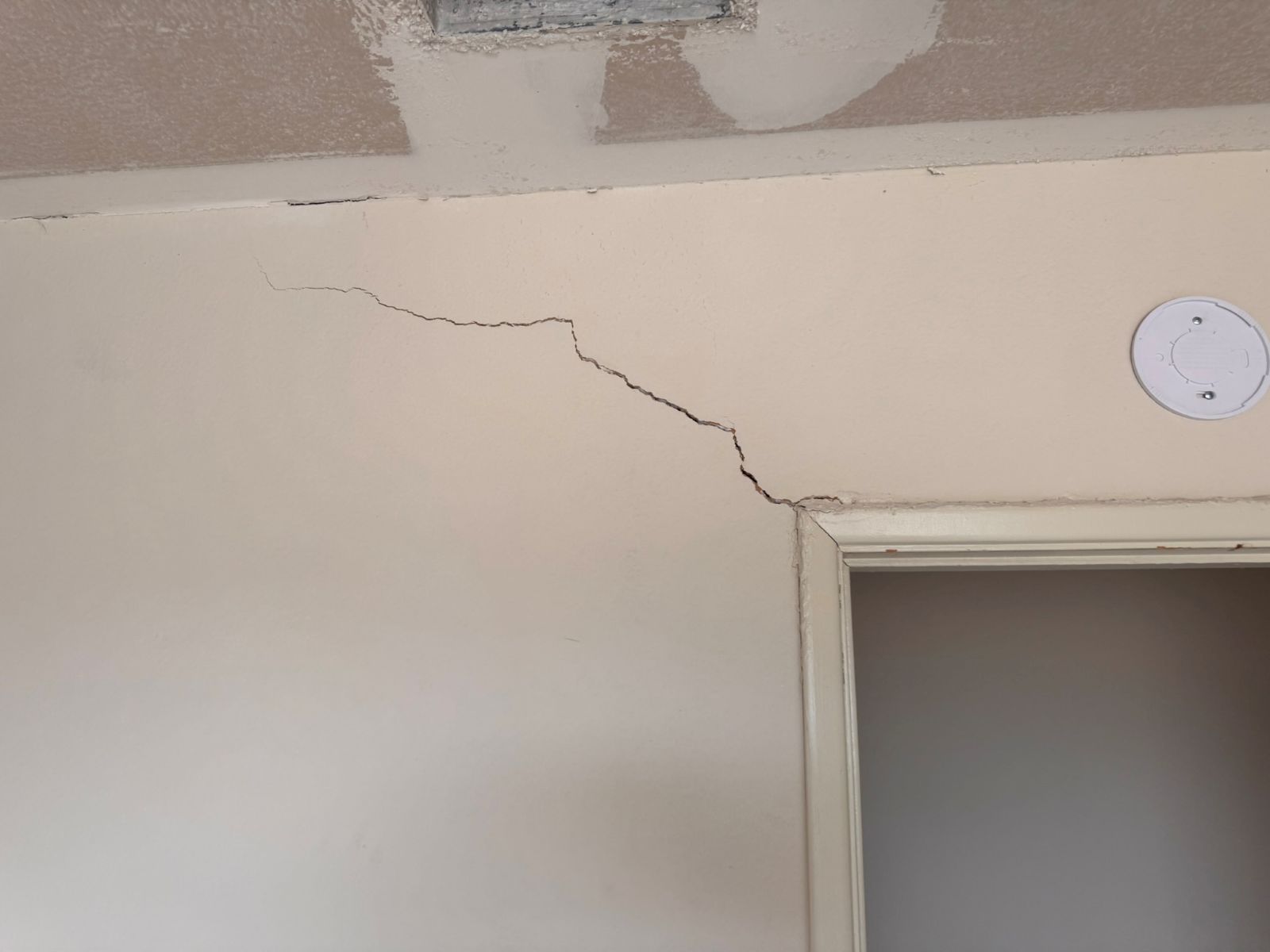
In a flipped home, this type of crack will often be patched and painted over. Look closely at door and window corners for fresh texture patches, a slightly different sheen, or subtle color variation in the paint. Those are signs something was there and got covered up rather than fixed.
Cosmetic renovations with no mechanical updates
A kitchen with new cabinet faces, quartz countertops, and designer fixtures, but with original 1970s galvanized supply lines and no evidence of an electrical panel upgrade, is a cosmetic flip. In San Diego’s older housing stock, mechanical systems are often the most expensive deferred maintenance. A flipper who put $50,000 into aesthetics and nothing into systems is selling you a kitchen that looks new but runs on aging infrastructure.
Pull permit history before you make an offer. If a major-looking renovation produced no permit records, that is material information you need.
Fresh paint in unusual locations
Flippers paint over problems. Pay specific attention to:
- Garage walls and ceiling: Fresh paint in a garage often covers water intrusion staining from roof leaks.
- Exterior walls near grade: Paint over efflorescence (white mineral deposits on the surface) indicates moisture wicking through the foundation.
- Under-sink cabinet interiors: New contact paper or fresh paint inside a cabinet hides chronic leak damage.
Everything new, nothing documented
A legitimate renovation updates what needs updating and keeps what is working. If every surface and fixture in a home was replaced within the past 90 days but the seller cannot produce a single contractor invoice or permit number, that should concern you. Ask what was replaced, why, and by whom. A seller who did the work right will have documentation. One who didn’t will not be able to produce it.
Due Diligence Steps Every Buyer Should Take
California’s standard purchase process includes a general inspection, but general inspectors cannot open walls, pressure-test plumbing, or excavate. For a flipped home, the general inspection should be the floor of your due diligence, not the ceiling.
1. Pull permit history before making an offer
San Diego City permit records are publicly searchable through the Development Services portal. Search by address to see every permit ever pulled, its scope, and whether it received a final inspection sign-off. For unincorporated areas, use the County of San Diego Permit portal. If major work was done with no corresponding permits, that is a material fact you need before you are in contract.
2. Hire a structural engineer for any property with cracking, sloped floors, or drainage concerns
A general inspector will note a crack. A structural engineer will tell you what caused it, how significant it is, and what remediation looks like. For any flipped home showing signs of foundation movement, hillside drainage issues, or soil disturbance, a structural engineer’s report is worth $500 to $800 before you remove contingencies.
3. Get a sewer scope
A sewer lateral inspection, running a camera from the house to the city connection, costs $150 to $350 and takes about 30 minutes. San Diego’s older neighborhoods are full of cast iron and Orangeburg sewer laterals. Collapsed sections, root intrusion, and offset joints are invisible from the surface but expensive to repair. On a flipped home, this is non-negotiable.
4. Verify the electrical panel
Older San Diego homes frequently have Federal Pacific Stab-Lok or Zinsco panels, both of which are considered fire hazards and are not insurable with many carriers. A flipper may have updated the kitchen and bathrooms without touching the panel. Have a licensed electrician evaluate it. If a sub-panel was added during the renovation, verify it is permitted and in a legal location. An illegally located sub-panel, like the one flagged in the correction notice above, is both a safety risk and a code violation the buyer inherits.
5. Request full documentation in writing
California requires sellers to disclose all known material defects on a Transfer Disclosure Statement (TDS). If a flipper had knowledge of a defect, even if they repaired it, the repair must be disclosed. Ask specifically for:
- Contractor invoices and signed contracts for all work performed
- Permit numbers and final inspection sign-offs
- Any pre-purchase inspections the flipper commissioned
- Warranties on new systems or appliances
A seller who cannot produce contractor documentation for a fully renovated home is telling you something important.
What Legitimate Renovation Work Looks Like
Permitted renovation work is transparent by definition. It is inspected at each phase before anything gets covered. When Murray Lampert completes a major addition or outdoor structure, the framing phase looks like this: structural members exposed and accessible, conduit properly routed, city-issued permit posted at the site, and inspection scheduled before insulation or drywall goes in.
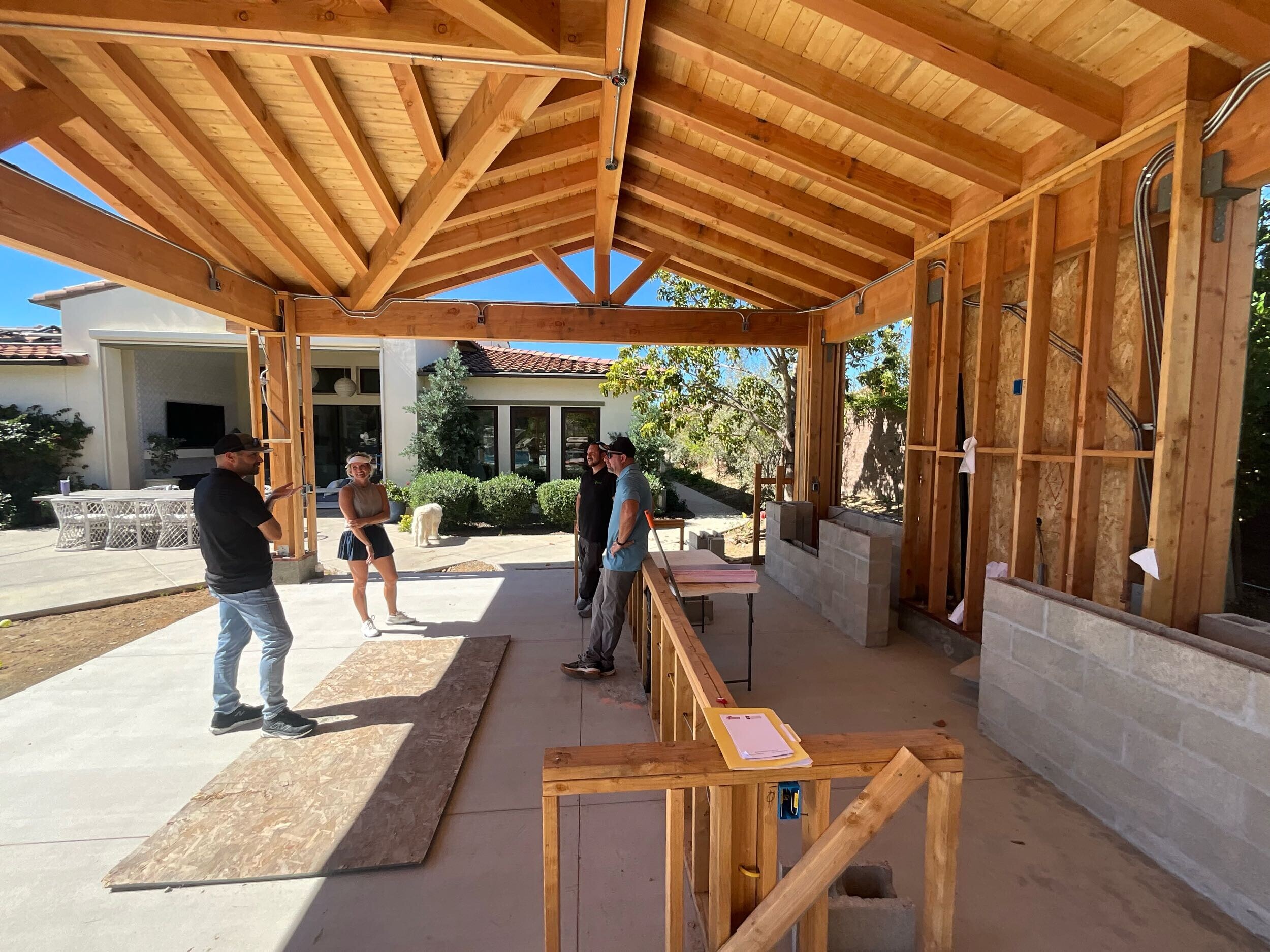
The homeowners in this photo are walking through the project with our team during the framing phase of an outdoor addition. A city inspector will review this framing before we close any walls. The permit is filed. The work is documented from design through completion.
That is what the permit process is for: not a bureaucratic obstacle, but a mechanism that ensures what gets built is structurally sound and fully disclosed to any future owner.
When you are evaluating a flipped home, you are entitled to that same transparency. If a seller cannot demonstrate that the renovation was permitted and inspected, they are asking you to assume the risk they were unwilling to assume themselves.
If You Already Bought a Flipped Home With Concealed Defects
If you have purchased a home and subsequently discovered defects that were not disclosed, California law may provide remedies. Real estate non-disclosure cases, where a seller had knowledge of a material defect and failed to disclose it on the Transfer Disclosure Statement, are litigable in California. Expert witness contractors are routinely engaged to document the scope of concealed damage and establish the cost of legitimate remediation.
If you believe you are in this situation, document everything before making any repairs. Photographs, contractor estimates, and inspection reports establish a timeline. The sequence of discovery matters in non-disclosure litigation, and contemporaneous documentation is critical. Consult a California real estate attorney with non-disclosure case experience.
Murray Lampert Design, Build, Remodel has served San Diego homeowners since 1975. CA Lic. #458038. A+ BBB rating since 1976. We specialize in fully permitted whole-home remodels, room additions, kitchen and bath renovations, and ADU construction, all designed in-house by our architectural and interior design team.